
THE UNIVERSITY
HISTORY AND MILESTONE
A Brief History of the
PHILIPPINE NORMAL UNIVERSITY
The phrase “normal school” is traceable to the French “école normale”, the institution for higher learning in France in the 18th century.
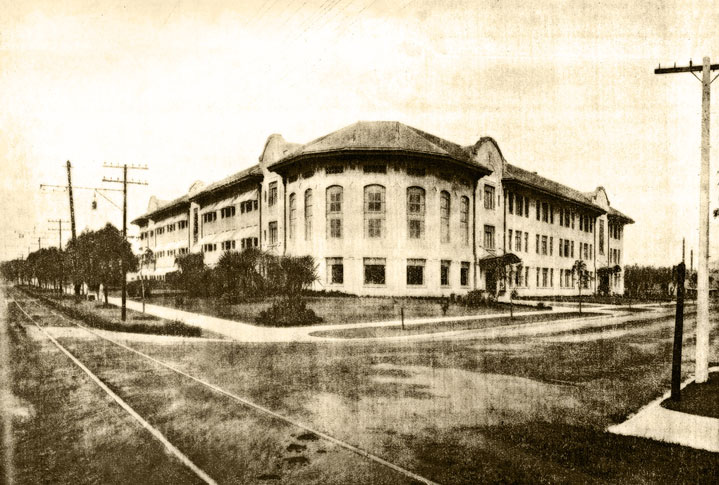
The present Philippine Normal University was originally the Philippine Normal School (PNS), the first institution of higher learning established during the American occupation of the Philippines. Created by Act No. 74 of the Philippine Commission, it gave Filipinos training in the science of teaching. The PNS formally opened on September 1, 1901, with Mr. Elmer B. Bryan as its first superintendent. Seven other Americans succeeded him before the designation of Mr. Manuel Escarilla as the first Filipino superintendent in 1939.
With the signing of the charter, Republic Act No. 416 on June 18, 1949 during the term of President Elpidio Quirino, PNS was converted into the Philippine Normal College, authorized to grant undergraduate and graduate degrees in education. Republic Act 6515 mandated the offering of doctorate and other academic programs relevant to the training of teachers. On December 6, 1991, the Philippine Normal College was converted into the Philippine Normal University. Finally, on January 12, 1992, it was elevated into a full-fledged university by President Corazon C. Aquino.
Dr. Macario Naval was installed as the president of the college. He was succeeded by Dr. Emiliano C. Ramirez in 1957, Dr. Gregorio C. Borlaza in 1971, Dr. Bonifacio P. Sibayan in 1972, Dr. Edilberto P. Dagot in 1981, Dr. Gloria G. Salandanan in 1991, Atty. Lilia S. Garcia in 1998, Dr. Nilo L. Rosas in 2002, Atty. Lutgardo B. Barbo in 2006, Dr. Ester B. Ogena in 2011, and Dr. Bert J. Tuga in 2019.
In recognition of its continued leadership in teacher education, PNU was designated as the National Center for Teacher Education by virtue of R.A. 9647 on June 30, 2009.
The main campus of the University is in the City of Manila with branches in Alicia, Isabela; Lopez, Quezon; Cadiz City, Negros Occidental; and Prosperidad, Agusan del Sur.
THE PNU SEAL

The PNU Seal is composed of the following symbols and their corresponding meaning:
The Torch stands for the light that illumines the path in building a temple of immortal souls in future generations.
The Open Book means that anyone may come to engraft a branch of knowledge in the stock of wisdom.
The Laurel Leaves serve as the emblem of victory, of a courageous flight of success.
All these symbols are interwoven together with the university’s triadic vision: Truth, Excellence, and Service as PNU continues to uphold its mandate as the premier institute in producing and nurturing innovative future teachers and education leaders.
THE MOTHER AND CHILD

The Mother and Child is a distinct icon of PNU, which is symbolized in the following:
The Mother symbolizes Inang Pamantasan.
As a mother is the light to every Filipino home, so is the teacher who is the light to the youth of every generation.
As the mother and child look forward ahead, they share the same vision of and selflessly working towards the realization of a more positive and stronger future for the nation through a dedicated workforce of innovative teachers and exemplary leaders.
While the book depicts a plethora of knowledge, the child being held by the hand to the right side of Inang Pamantasan signifies the institution’s commitment of guarding human ken and the teaching of Right—right character and right discernment by preserving universal truths and cherished Filipino values.
THE TORCH WITH THE PNU FLAME

The Torch with the PNU Flame has the following symbolism:
The torch icon symbolizes the source of enlightenment and guidance.
This icon of the torch is developed to project the University’s priority function of providing a superb learning experience.
The flame is designed with the initials of the University, which represent the dynamics and utmost willingness of PNU in leading the path of nurturing future specialized teachers and educational leaders with varied innovative modalities of instruction and strong conceptual foundations.