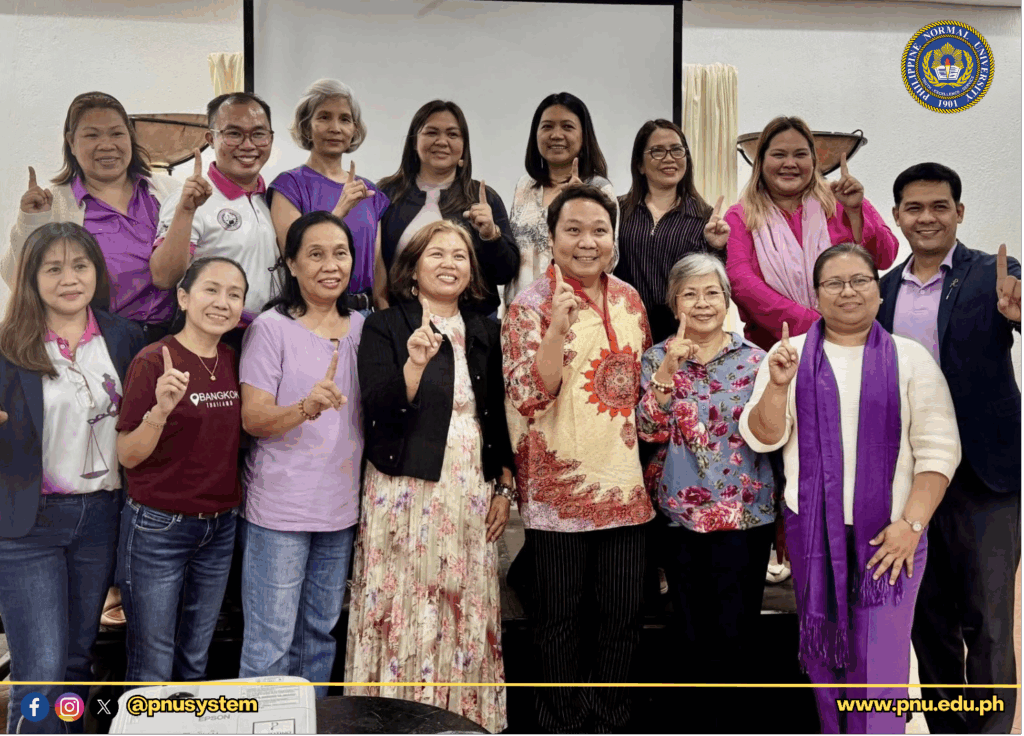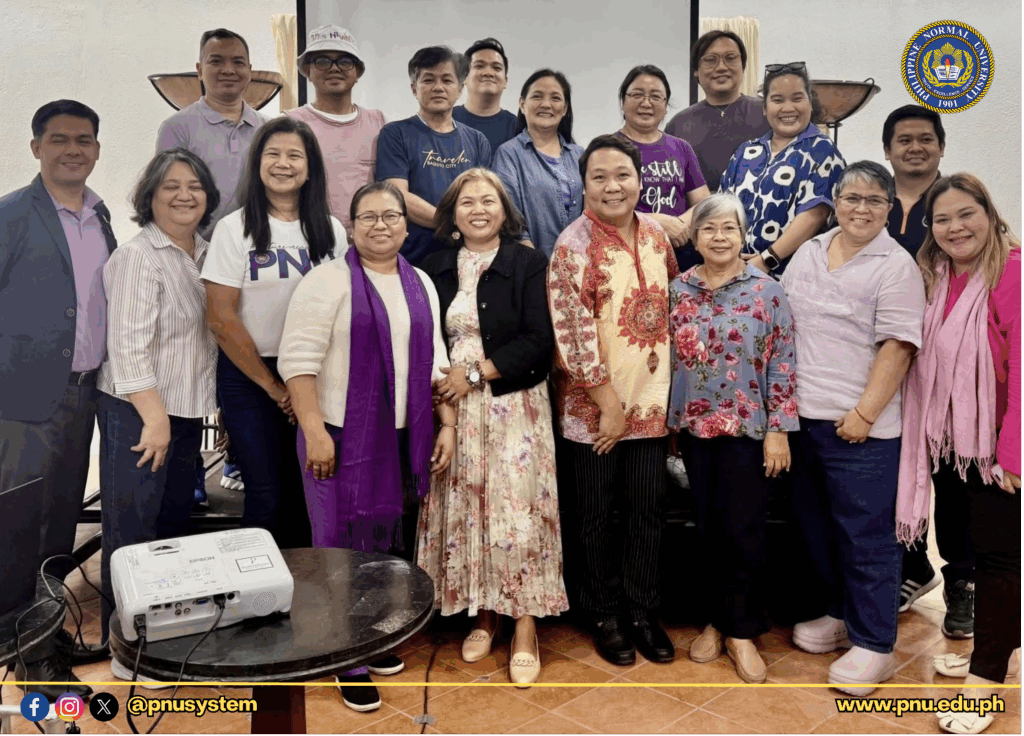

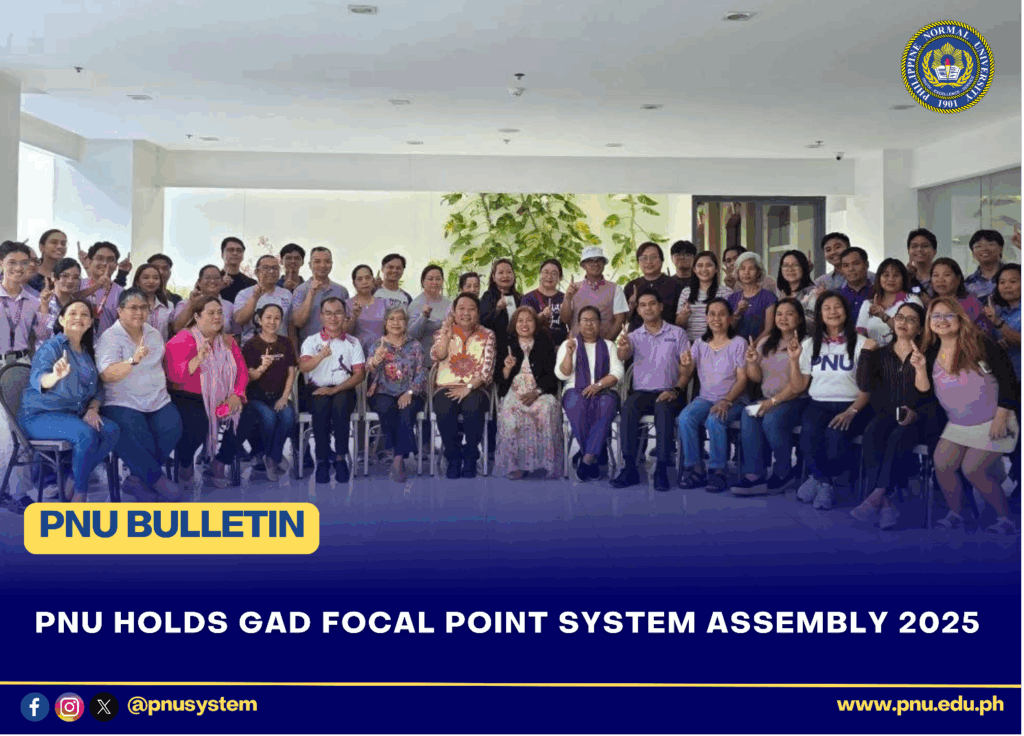
The Philippine Normal University convened the members of the Gender and Development Focal Point System (GFPS), in a three-day assembly from May 14 to 16, 2025, at PonteFino Hotel in Batangas City. The assembly aimed to enhance the competencies of GFPS members in critical areas such as gender analysis, gender mainstreaming, and Gender and Development (GAD) planning and budgeting. As part of PNU’s ongoing efforts to promote gender sensitivity and responsiveness in policies and programs, the assembly featured a comprehensive GAD seminar that brought together key resource speakers to share essential concepts and tools for effectively mainstreaming gender equality within organizational frameworks. The assembly was organized by the Gender Equity, Diversity, and Inclusion Office.
Ms. Araceli B. Mercado, a seasoned GAD advocate, opened the seminar with an in-depth discussion on the fundamental concepts of Gender and Development. She underscored the importance of integrating gender perspectives throughout the stages of policy-making and project development. To reinforce these ideas, Ms. Mercado facilitated a hands-on workshop on GAD Planning and Budgeting, guiding participants in crafting gender-responsive plans aligned with institutional mandates. The interactive session allowed attendees to apply theoretical knowledge to practical planning exercises, equipping them with the skills necessary to develop inclusive and effective GAD budgets.
Building on this foundation, Prof. Iona Ofelia B. Zanoria presented the Gender Equality, Diversity, and Inclusivity (GEDI) Framework—a cornerstone for advancing gender-responsive initiatives within the institution. Prof. Zanoria emphasized how the GEDI Framework informs the creation of inclusive policies and practices. She also shared the accomplishments of the Gender Equality, Diversity, and Inclusivity Office (GEDIO) during her tenure as director, highlighting successful programs that have fostered a more inclusive academic and administrative environment.
To further strengthen the technical knowledge of participants, Dr. Helen H. Dayo led a session on the Harmonized Gender and Development Guidelines (HGDG). Her presentation provided valuable insights into the effective application of the HGDG, a critical tool for ensuring that development programs and projects are gender-responsive. Dr. Dayo stressed the importance of integrating the HGDG across the project cycle and offered practical strategies for its implementation—particularly beneficial for GAD focal persons and project implementers.
Overall, the seminar served as a vital platform for building the capacity of institutional stakeholders in gender mainstreaming, reaffirming the university’s commitment to equity, inclusivity, and transformative development.