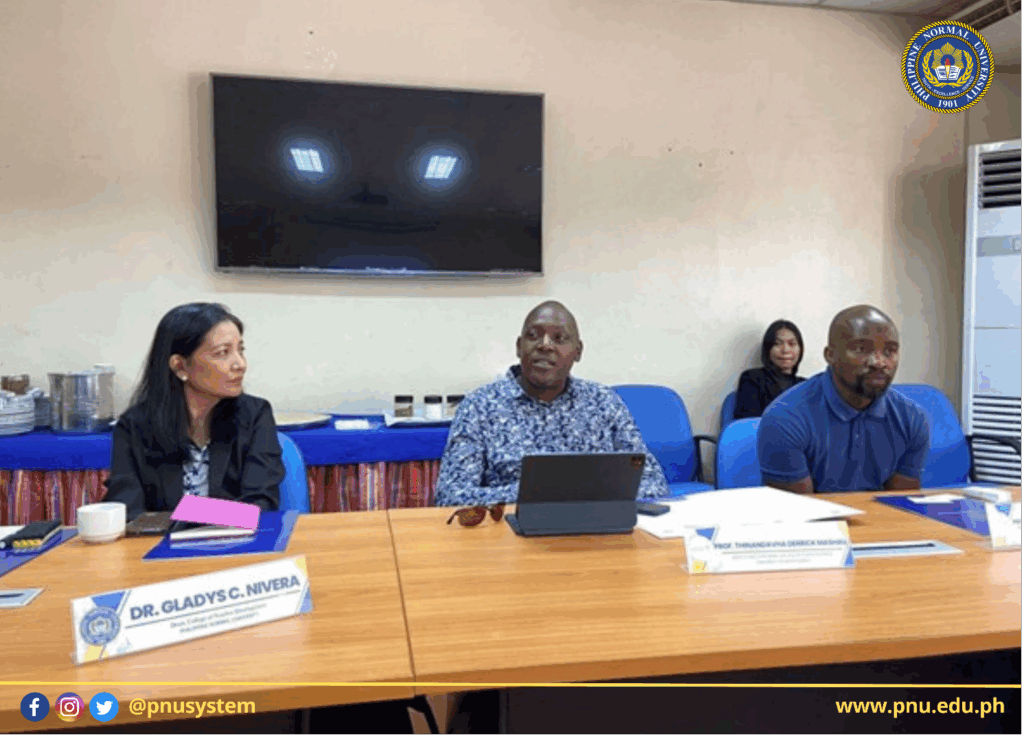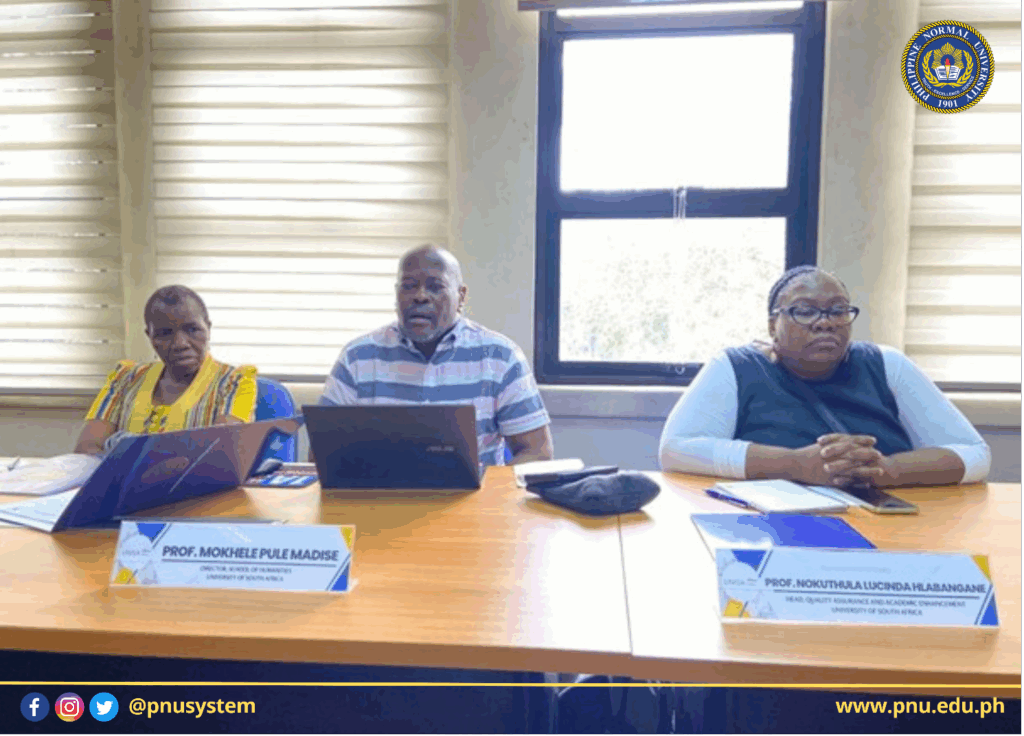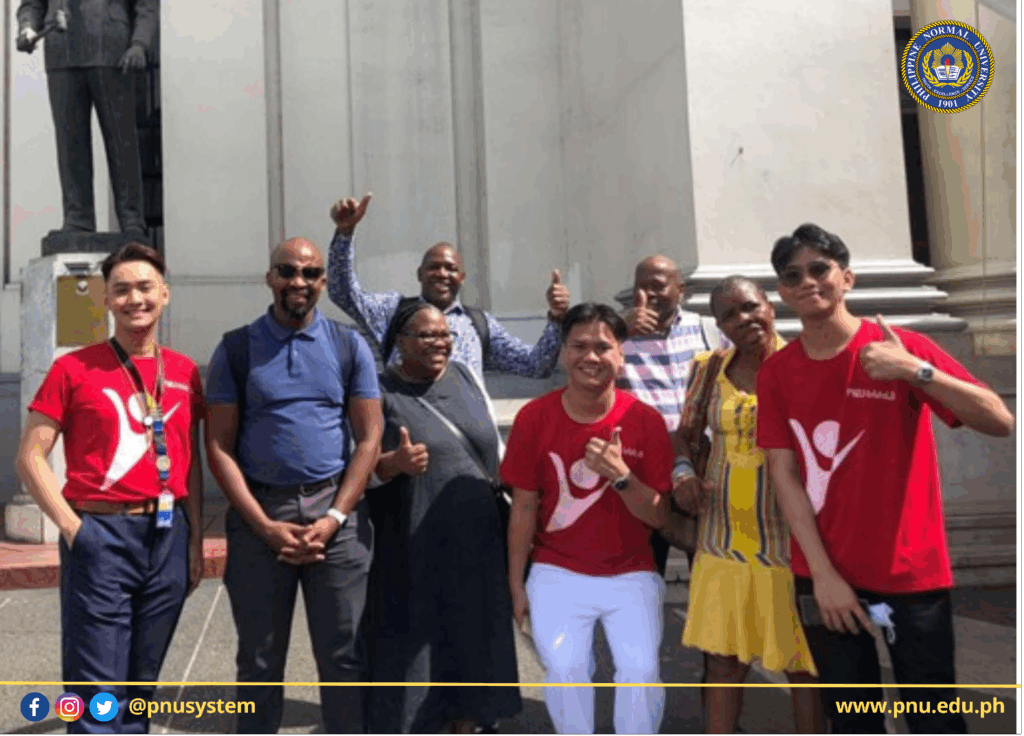
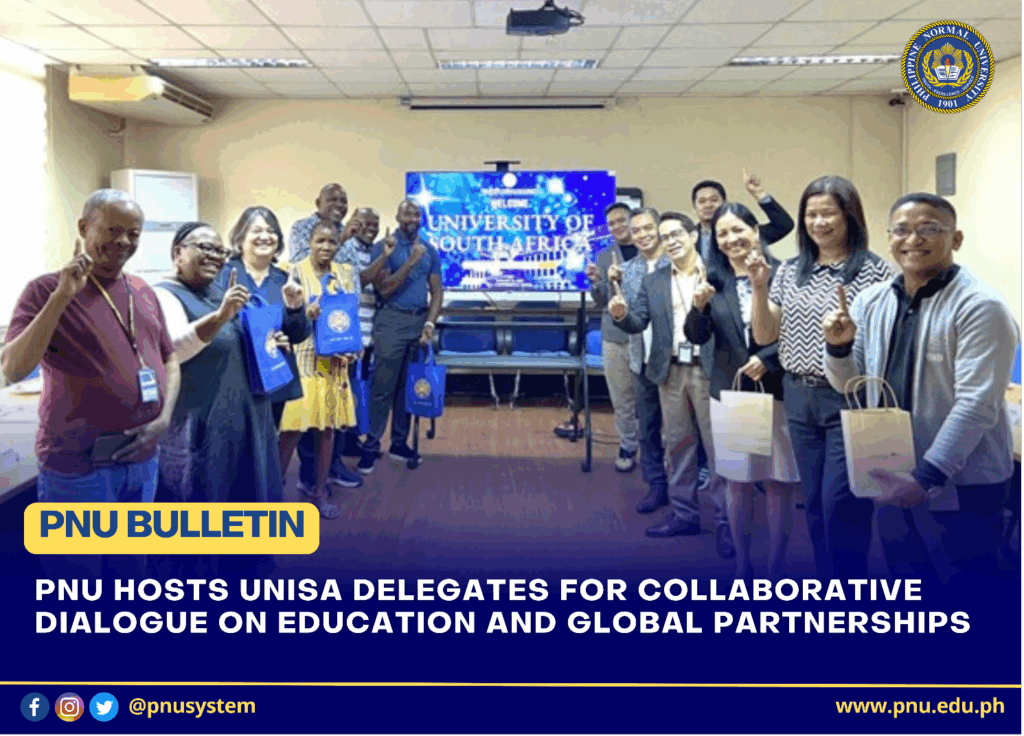
The Philippine Normal University welcomed the delegation from the University of South Africa (UNISA) to its main campus on January 31, 2025, for an insightful exchange of ideas and discussions on strengthening academic collaboration. The meeting underscored the importance of cultural exchange and highlighted the rich educational heritage of the Philippines.
The delegates were received by university officials, led by the college deans: Dr. Gladys C. Nivera of the College of Teacher Development, Dr. Antriman V. Orleans of the College of Advanced Studies, and Dr. Celia M. Ilanan of the College of Alternative and Lifelong Learning. Also present were the associate deans: Dr. Alfons Jayson O. Pelgone of the Faculty of Science, Technology, and Mathematics; Dr. Ma. Jhona Acuña of the Faculty of Languages and Literature; Dr. Niño Naldoza of the Faculty of Education and Information Science; and Dr. Rafael V. Panganiban of the Faculty of General Education and Experiential Learning, all of whom actively contributed to the discussions. Director Bryan C. Dayuta of the Linkages and International Office also attended the meeting.
In his opening remarks, Director Dayuta emphasized the significance of international engagements, highlighting PNU’s role in fostering global ties and promoting cross-cultural learning. Professor Thinandavha Derrick Mashau, Deputy Executive Dean of the College of Human Sciences at UNISA, followed with an overview of his university’s educational approach. He shared valuable insights into UNISA’s unique programs in language, social sciences, and humanities, which form the core of the institution’s academic identity and international reach.
Following the presentations, the meeting transitioned into a dynamic open forum where UNISA delegates posed a series of pertinent questions to PNU’s academic representatives. Among the main topics discussed were the duration of undergraduate and graduate programs at PNU, as well as the structure and evolution of Information Science Studies. UNISA sought clarification on PNU’s transition from a four-year to a three-year program, expressing interest in understanding academic flexibility and adaptability in different contexts. Further inquiries focused on general education at PNU, particularly how the university integrates inter/intrapersonal and transnational learning into its curriculum.
The discussion also covered microcredentialing and lifelong learning. The UNISA delegates were particularly interested in PNU’s approach to continuing teacher development and its system for awarding credit points through microcredentialing programs. This conversation expanded to broader themes of professional development, including assessment practices for graduate students and the availability of professional tracks for those pursuing advanced studies. Additionally, the forum explored PNU’s Research Track, a program designed to prepare graduate students to become full-time researchers rather than traditional educators, aligning with global trends in academic specialization.
Another key topic was indigenous knowledge and cultural preservation. UNISA representatives expressed interest in the commonalities between their institution and PNU, particularly how both universities incorporate these themes into their curricula. PNU responded by highlighting its commitment to these issues, noting that departments such as the Faculty of Behavioral and Social Sciences engage deeply with topics related to social change and cultural advocacy. While UNISA does not formally offer Catalytic Studies programs, PNU explained how its courses in fields such as sociology and anthropology reflect similar objectives by promoting social change and preserving cultural heritage.
Both universities reaffirmed their commitment to expanding their collaborative efforts, fostering deeper academic and cultural exchanges in the years to come.